Design Research: Agnes Martin
The Pursuit of Happiness, Inner Calm and Serene Emotional States

"Art is the concrete representation of our most subtle feelings."
Abstract
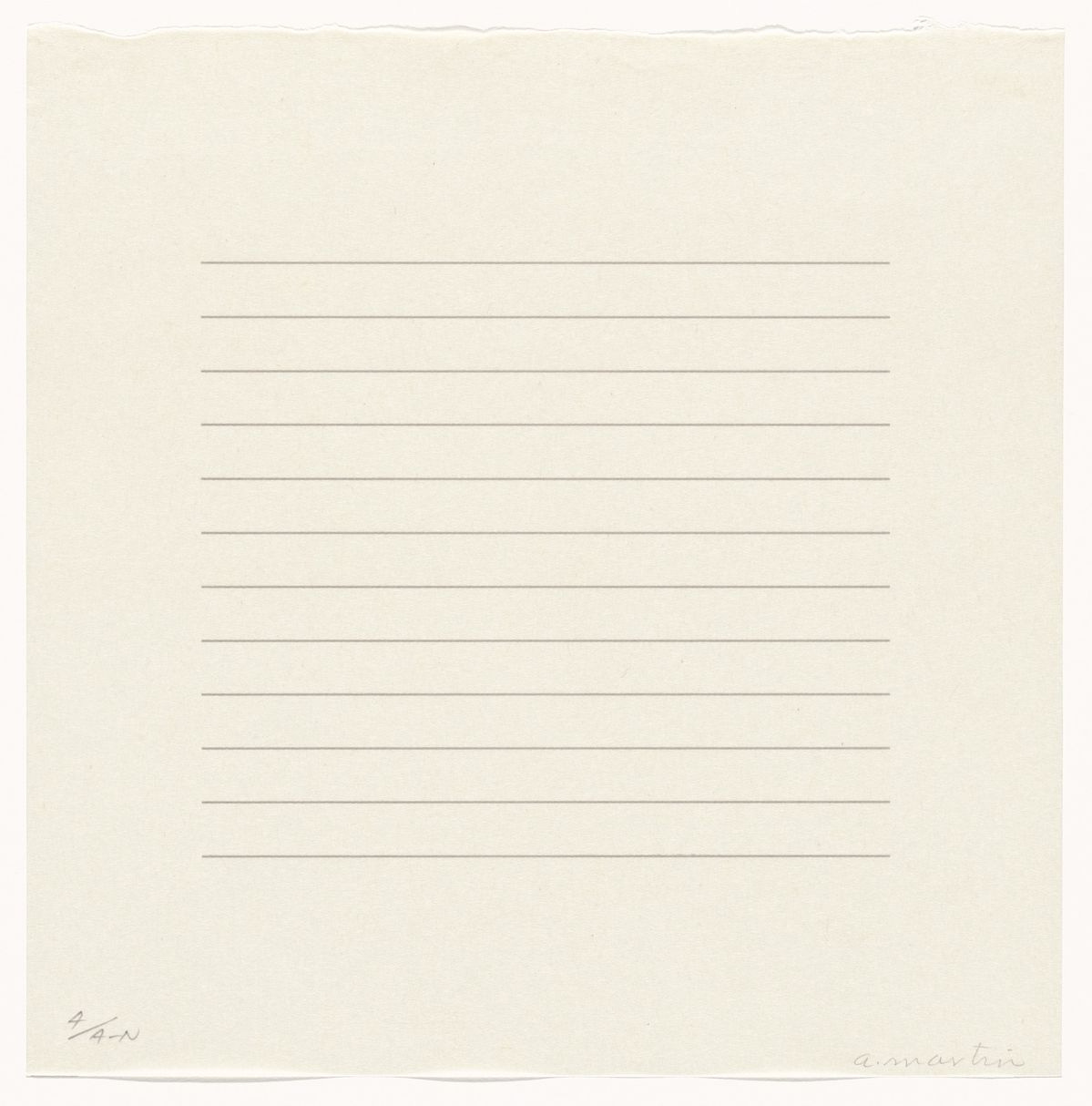
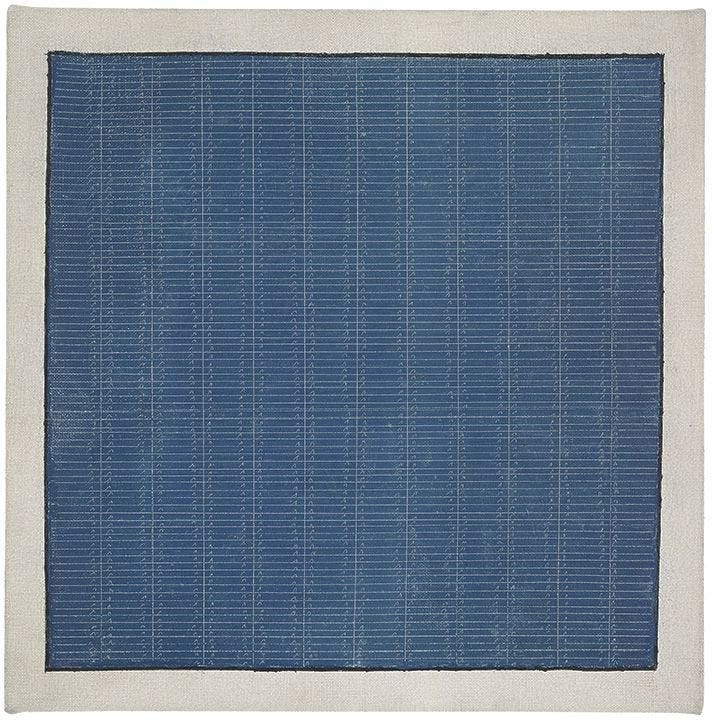
Few artists of the twentieth century are as frequently misunderstood as Agnes Martin. Often grouped with Minimalism because of her grids, restrained palettes, and geometric rigor, Martin consistently rejected the label. Her paintings are not exercises in formal reduction so much as visual manifestations of psychological and spiritual states. Throughout her life, she argued that art should not represent the external world but rather embody emotions such as happiness, innocence, beauty, freedom, and love. The sparse lines and delicate structures that define her work were intended not as intellectual systems but as vehicles for transcendence.
This article examines Martin’s philosophy, working methods, major bodies of work, personal life, intellectual influences, and enduring significance. It argues that Martin’s achievement lies in her radical conviction that painting could function as a direct expression of inner consciousness, detached from narrative, politics, and representation. Her work constitutes one of the most sustained investigations of perception, silence, and emotional clarity in modern art.
Introduction: Beyond Minimalism
Art history frequently places Agnes Martin alongside figures such as Donald Judd, Sol LeWitt, and Robert Ryman. The comparison is understandable. Martin’s mature paintings consist largely of hand-drawn grids, horizontal bands, and subtle fields of color. Their visual vocabulary appears minimalist.
Yet Martin repeatedly insisted that her concerns were fundamentally different. While Minimalism often emphasized objecthood, industrial materials, and impersonal systems, Martin sought emotional and spiritual experience. She described her paintings as representations of abstract emotions rather than formal structures. In one interview, she stated: