

Design Research: Donald Judd
Objects, Architecture, Politics, and the Pursuit of Actual Space

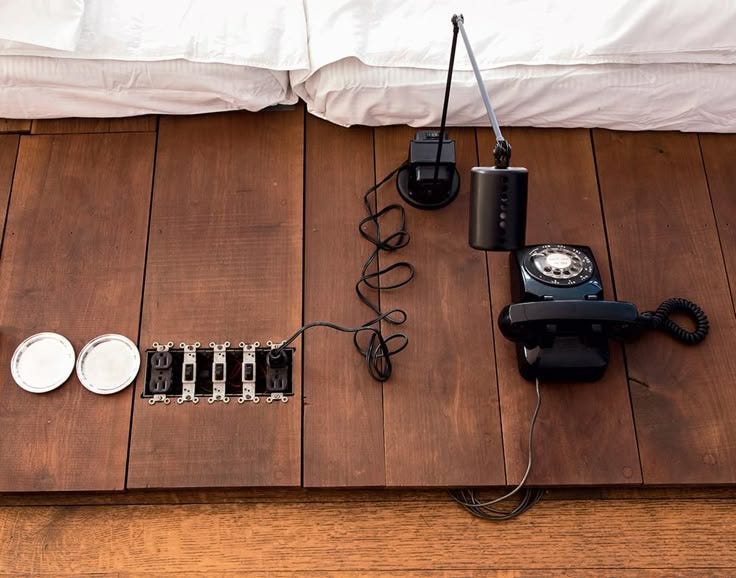
Few artists are as frequently discussed and as persistently misunderstood as Donald Judd. He is routinely identified as the central figure of Minimalism, yet he spent much of his career resisting the term. The common image of Judd—an artist producing industrial boxes in aluminum and Plexiglas—captures only a fraction of the scope of his work. Judd was simultaneously an artist, critic, philosopher, designer, architect, preservationist, landowner, curator, and institutional builder. More importantly, he was one of the twentieth century’s most influential theorists of space.
Judd’s significance lies not merely in the objects he produced but in his attempt to redefine what art could be. Beginning in the early 1960s, he rejected the traditional distinction between painting and sculpture and proposed a new category he called “specific objects.” Rather than creating representations, symbols, narratives, or metaphors, Judd sought to create works that simply existed as themselves. His project would fundamentally alter the course of contemporary art and architecture.
Today, Judd’s legacy extends from museum collections around the world to the permanently installed environments of Marfa, Texas, where he attempted nothing less than a total rethinking of the relationship between artwork, architecture, landscape, and viewer.
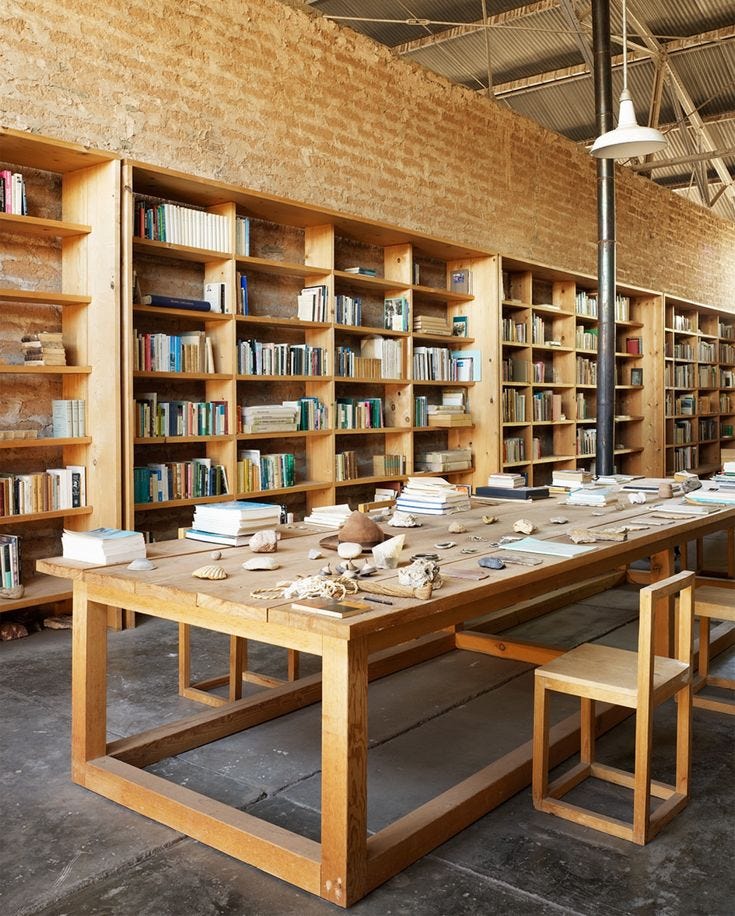
Intellectual Formation and Early Development
Donald Clarence Judd was born in Excelsior Springs, Missouri, in 1928. Unlike many artists of his generation, his intellectual development was as important as his artistic training. After military service, he studied philosophy at Columbia University while simultaneously attending the Art Students League in New York. He graduated from Columbia with a degree in philosophy, a background that would profoundly shape his later writing and artistic practice.
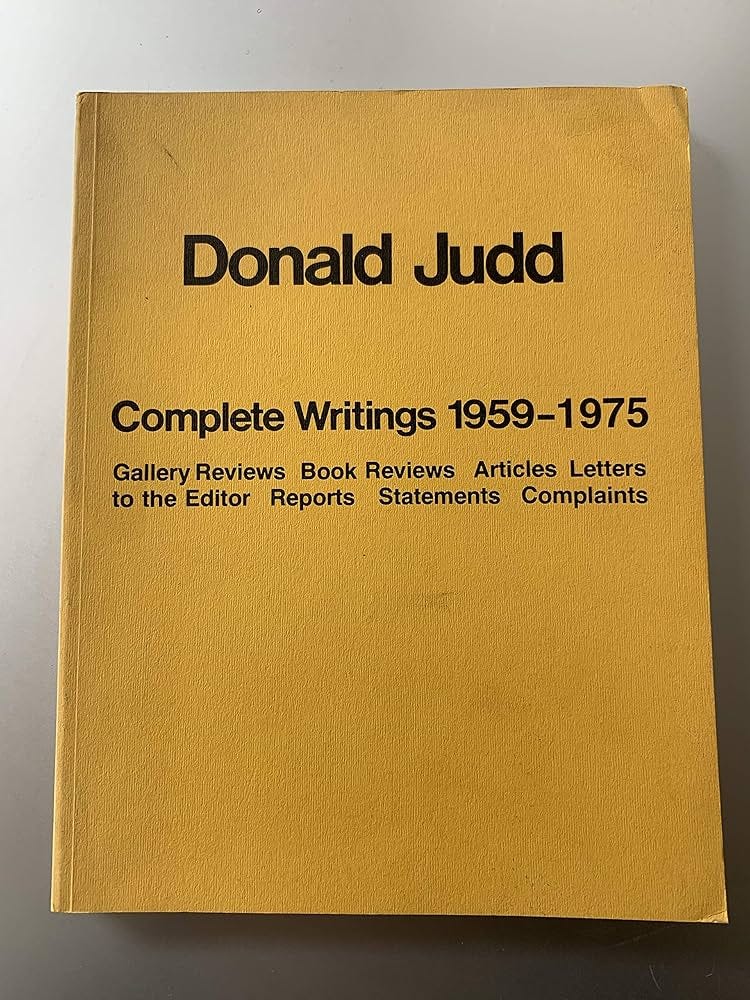
Before becoming widely known as an artist, Judd established himself as a prolific critic. Between 1959 and 1965 he published hundreds of reviews and essays, developing a formidable understanding of contemporary art while refining the ideas that would later underpin his own work. During this period he was arguably more visible as a writer than as an artist. His criticism reveals an early dissatisfaction with the inherited conventions of European painting and sculpture and a growing interest in direct experience, material presence, and spatial reality.
This intellectual foundation distinguishes Judd from many contemporaries. His art did not emerge primarily from studio experimentation. Instead, it emerged from a sustained theoretical inquiry into the nature of perception and the limitations of existing artistic categories.
The Emergence of “Specific Objects”
Judd began as a painter. His works from the 1950s moved gradually from expressionistic imagery toward increasingly abstract arrangements of geometric forms. During the late 1950s and early 1960s he incorporated physical elements into painted surfaces, producing hybrid works that projected into real space. Eventually he concluded that painting’s reliance on illusion made it fundamentally inadequate for his purposes.
The turning point came with his landmark essay Specific Objects, published in 1965. In that text, Judd argued that the most important new art no longer belonged to either painting or sculpture. Instead, artists were creating three-dimensional works that occupied actual space rather than depicting fictional space. He regarded real space as inherently more powerful than represented space.
This argument represented a radical departure from centuries of Western artistic tradition. Rather than constructing images, Judd sought to construct situations in which viewers would encounter materials, proportions, light, color, and space directly.
His works were not intended to symbolize anything. They were intended to exist.
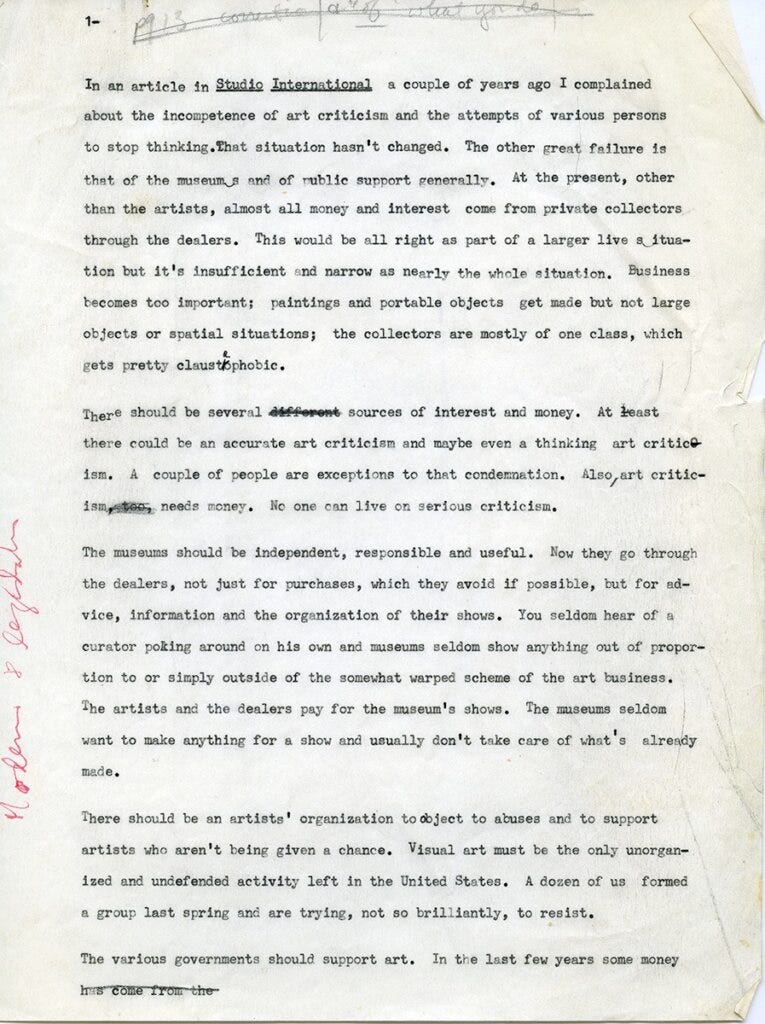
“The museums should be independent, responsible and useful. Now they go through the dealers, not just for purchases, which they avoid if possible, but for advice, information and the organization of their shows. You seldom hear of a curator poking around on his own and museums seldom show anything out of proportion to or simply outside of the somewhat warped scheme of the art business. The artists and the dealers pay for the museum's shows. The museums seldom want to make anything for a show and usually don't take care of what's already made.”
Formal Systems and Major Bodies of Work
By 1963 Judd had developed the formal language that would occupy him for the remainder of his career. Although the public often views his output as repetitive, his major bodies of work constitute an extraordinarily rigorous investigation of variation within strict constraints.
Vertical Stacks
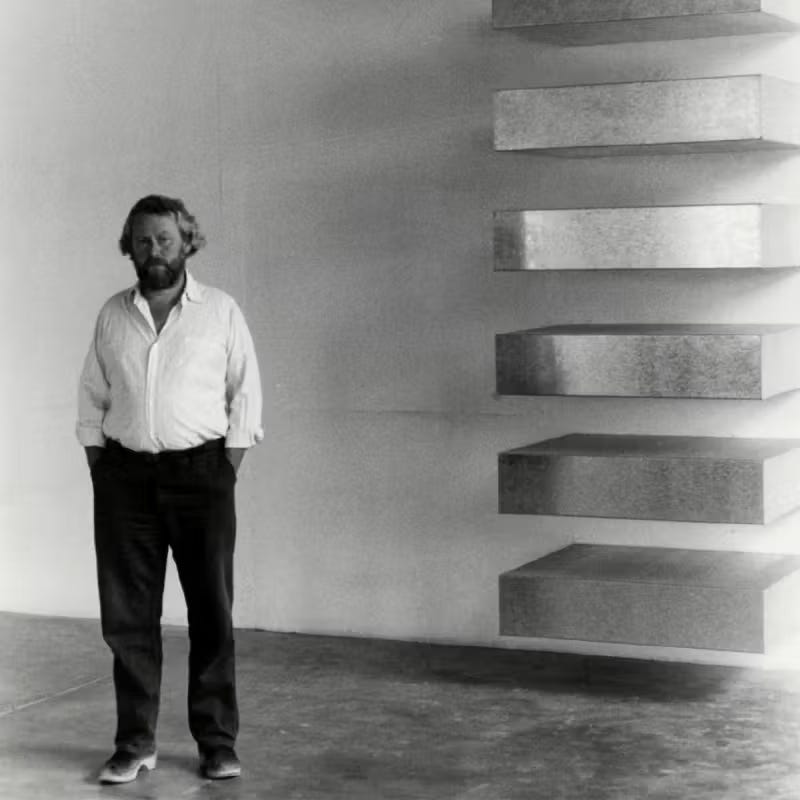
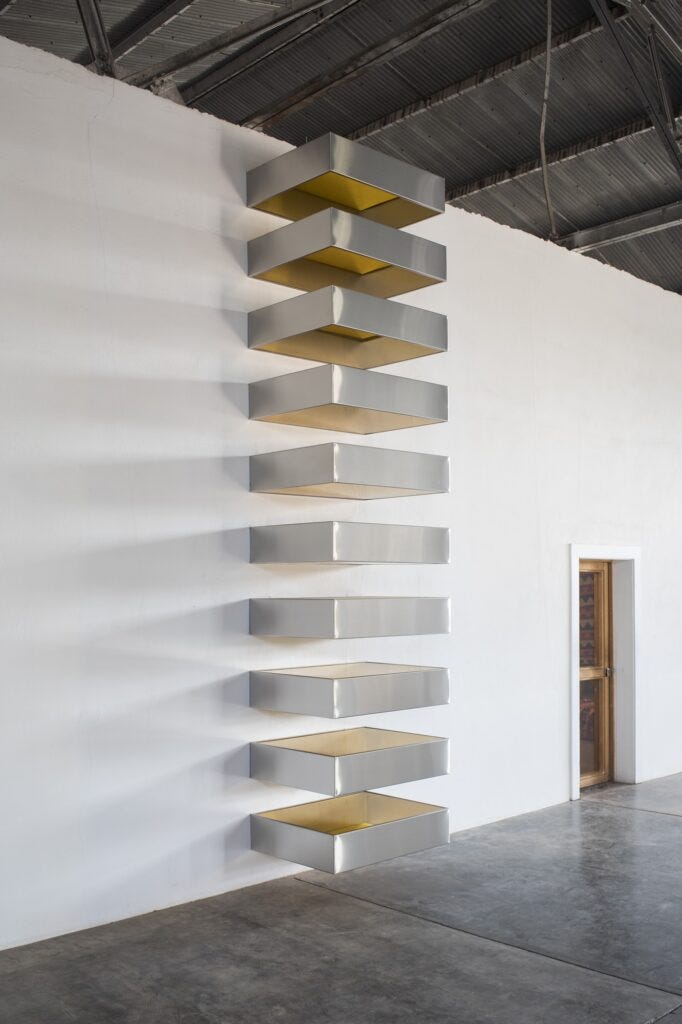
Perhaps Judd’s most recognizable works are the “stacks” first developed in 1965.
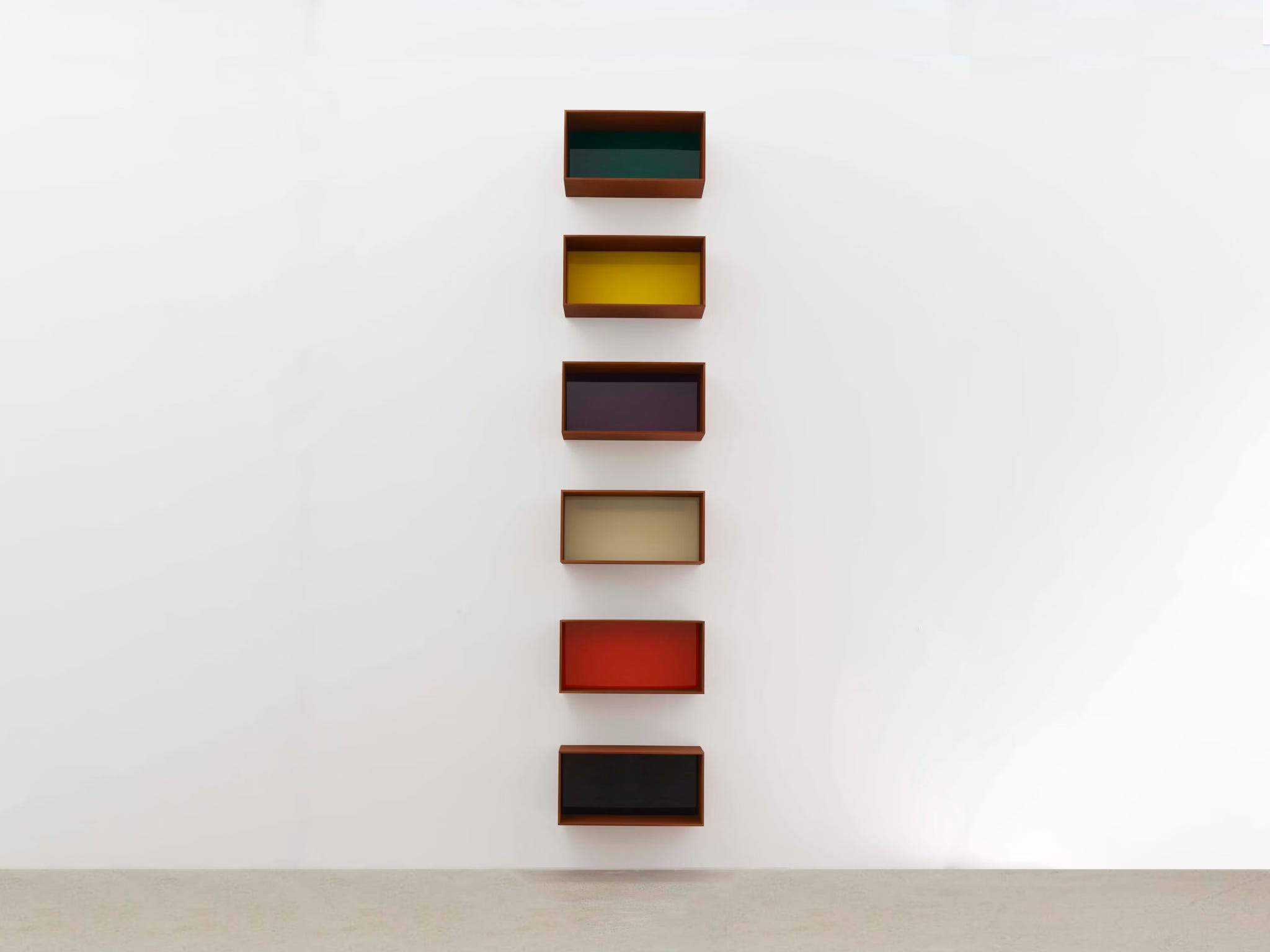
These consist of identical units mounted vertically on a wall, extending from near floor level to near ceiling level. The spacing between units equals the height of each unit, producing a mathematically regulated sequence.
The stack format eliminated traditional compositional hierarchy. No element was privileged over another. Viewers could not identify a focal point because the work was conceived as a continuous system rather than an arrangement of parts. The object simultaneously occupied wall space, architectural space, and perceptual space.


It isn’t necessary for a work to have a lot of things to look at, to compare, to analyze one by one, to contemplate. The thing as a whole, its quality whole, is what is interesting. The main things are alone and are more intense, clear and powerful.
Donald Judd
Floor-Based Works
Beginning in the mid-1960s, Judd produced numerous floor-based works consisting of rectilinear volumes constructed from metal, Plexiglas, wood, or concrete.
These pieces challenged conventional expectations of sculpture. Rather than occupying pedestals, they shared the viewer’s physical space. They neither depicted objects nor dramatized gesture. Their significance emerged through proportion, material, color, and relationship to the surrounding environment.
Materiality and Industrial Fabrication
One of Judd’s most consequential innovations was his treatment of materials.
Traditional sculpture often transformed materials into representations. Judd sought the opposite. Materials were allowed to remain visibly themselves.
Throughout his career he employed:
Aluminum
Stainless steel
Galvanized iron
Copper
Brass
Plexiglas
Concrete
Plywood
Enamel paint
Anodized metal
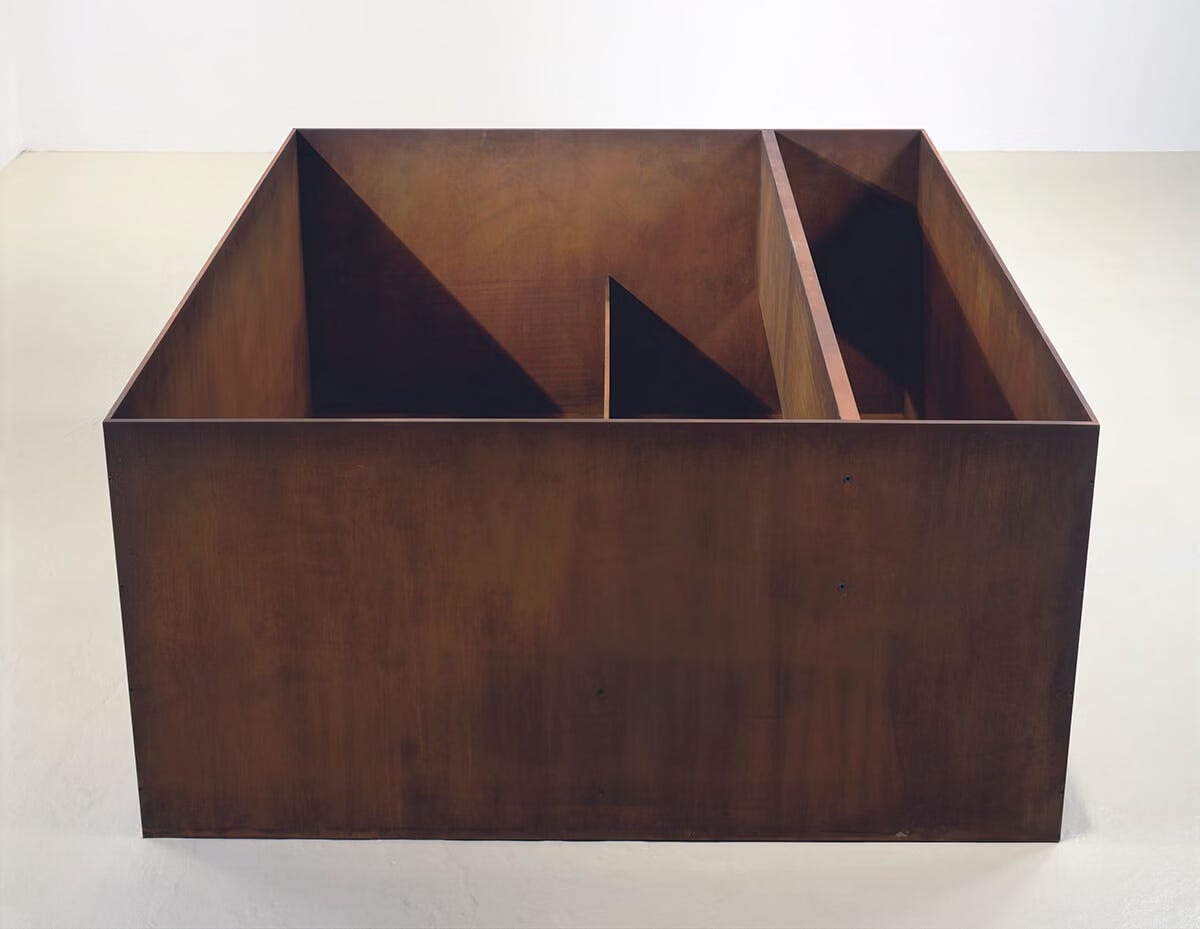
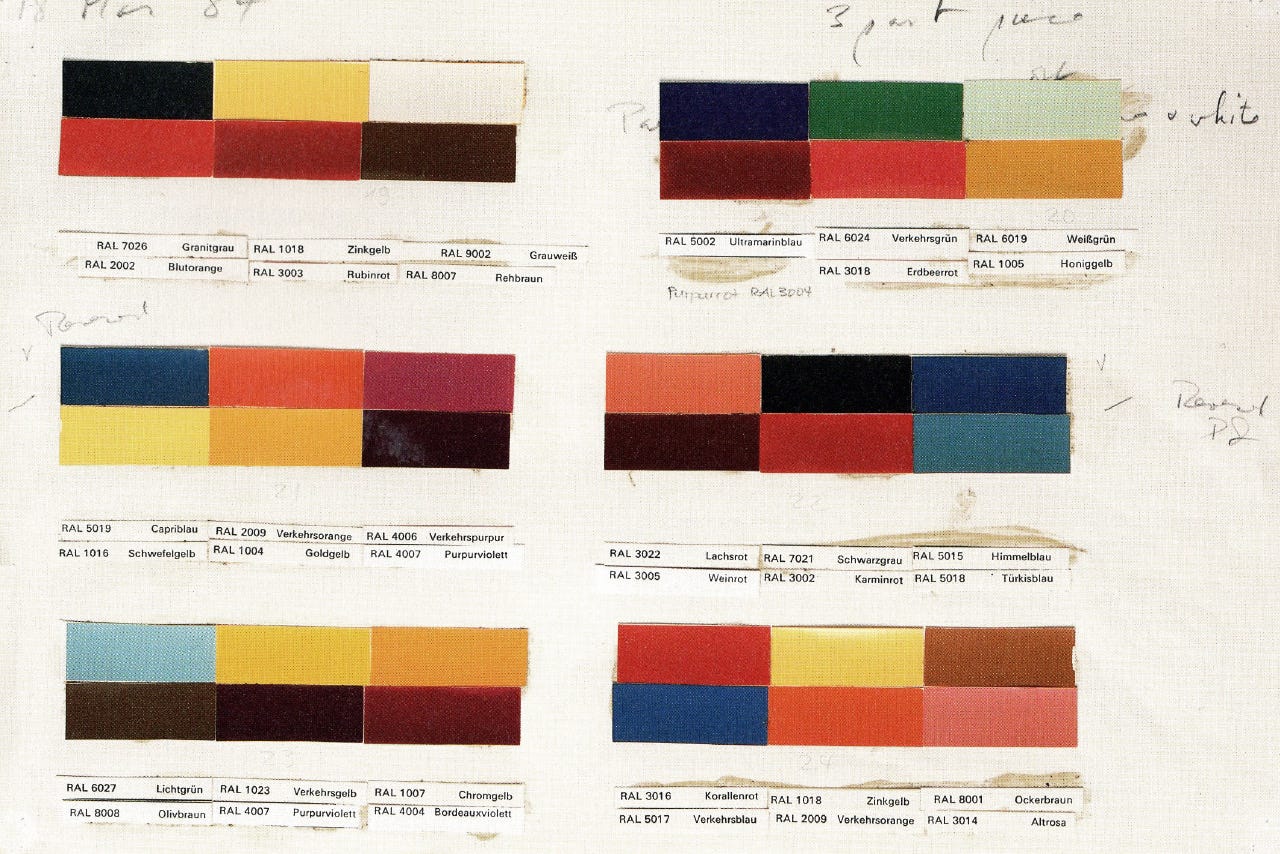
Industrial fabrication became central to this strategy. Beginning in the mid-1960s, many works were manufactured by industrial fabricators according to exact specifications. Critics initially viewed this as a rejection of craftsmanship. Judd saw it differently. Delegating fabrication eliminated traces of expressionistic touch and allowed attention to focus on proportion, structure, and material reality.
Particularly important was Plexiglas, whose transparency allowed interior spaces to become visible components of the work. Colored Plexiglas transformed light itself into a material element.
In Judd’s hands, materials ceased to be carriers of symbolism and became generators of experience.
Space as a Primary Artistic Concern
The central subject of Judd’s work was never the object alone.
It was space.
“Actual space is intrinsically more powerful and specific than paint on a flat surface.”
Donald Judd
His most famous statement may be that “actual space” possesses greater power than illusionistic space. This conviction guided virtually every aspect of his practice.
For Judd, space was not empty background. Space was an active material. Objects organized it, revealed it, divided it, and intensified awareness of it.
This helps explain why photographs often fail to communicate the force of his work. A Judd piece is not simply seen. It is encountered through bodily movement. One must walk around it, observe changing angles, notice reflections, and experience shifting relationships among object, architecture, light, and viewer.
A particularly insightful explanation offered by observers of Judd’s work emphasizes how even simple concrete forms generate endlessly changing perceptual experiences as sunlight, shadow, and viewpoint change. This dynamic interaction between object and environment lies at the heart of Judd’s project.
Marfa and the Concept of Permanent Installation
Perhaps Judd’s greatest achievement was not a sculpture but an environment.
Beginning in the early 1970s, he became increasingly dissatisfied with temporary museum exhibitions. He believed artworks were routinely displayed under conditions that distorted their meaning. As a solution, he developed the concept of permanent installation.
Marfa, Texas became the laboratory for this vision.
There, Judd acquired extensive property, including former military buildings, warehouses, houses, and ranchland. These sites eventually became the foundation of the Chinati project, an unprecedented attempt to create permanent environments for art.
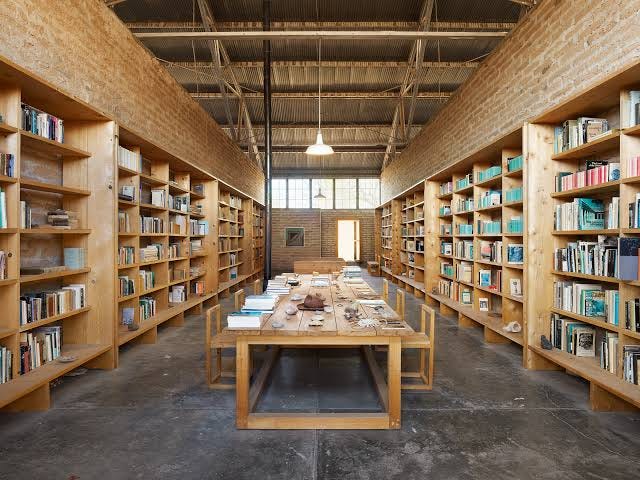
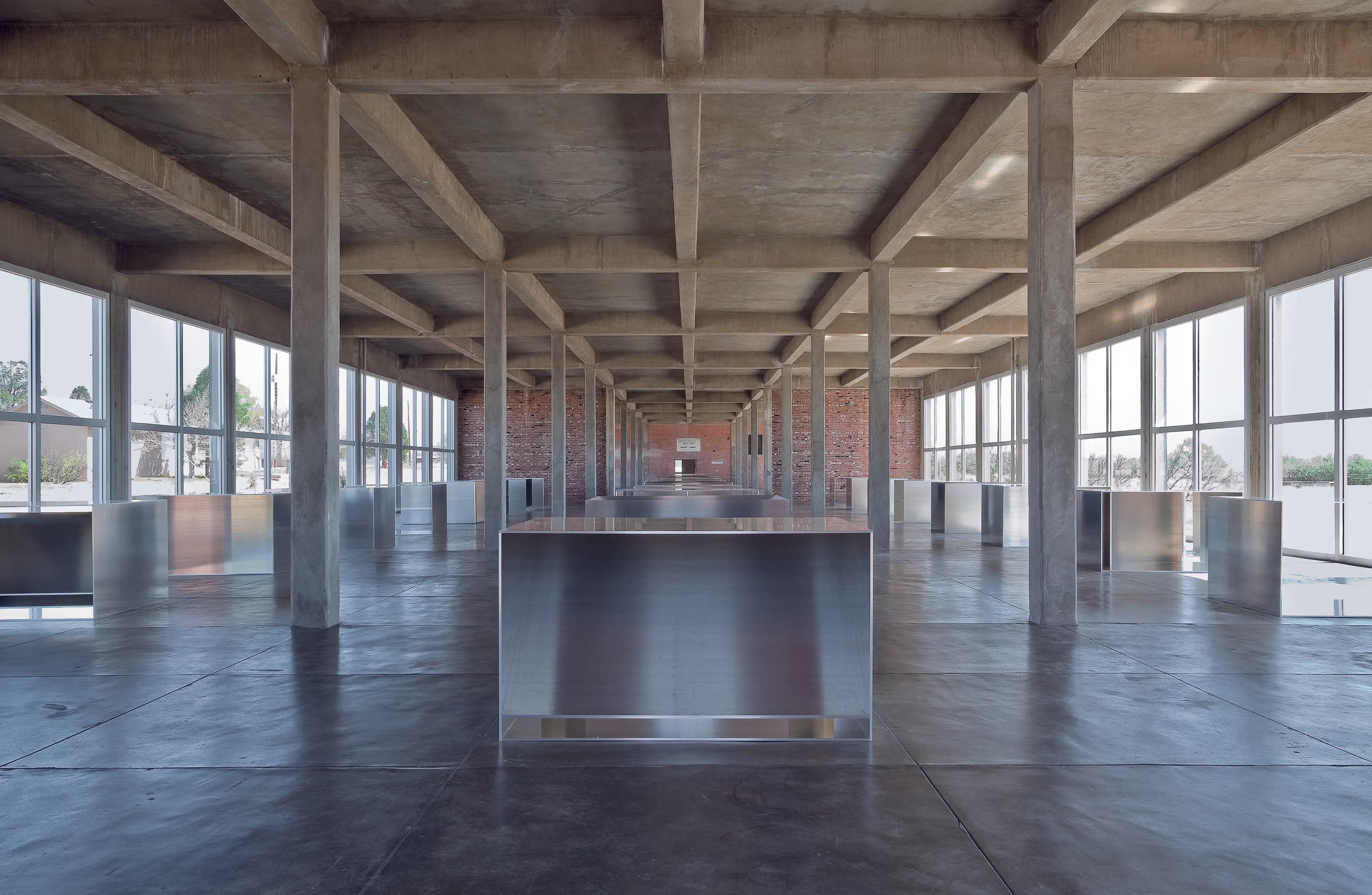
The most celebrated installation is the series of 100 mill aluminum works housed in converted artillery sheds. The architecture was modified specifically to accommodate the pieces, allowing natural light to interact with them continuously throughout the day and year. The installation functions less as an exhibition than as an ecosystem of light, space, architecture, and object.
Marfa transformed Judd from artist into institution-builder.
Architecture, Design, and Spatial Practice
A common misconception is that Judd’s furniture and architecture were secondary activities.
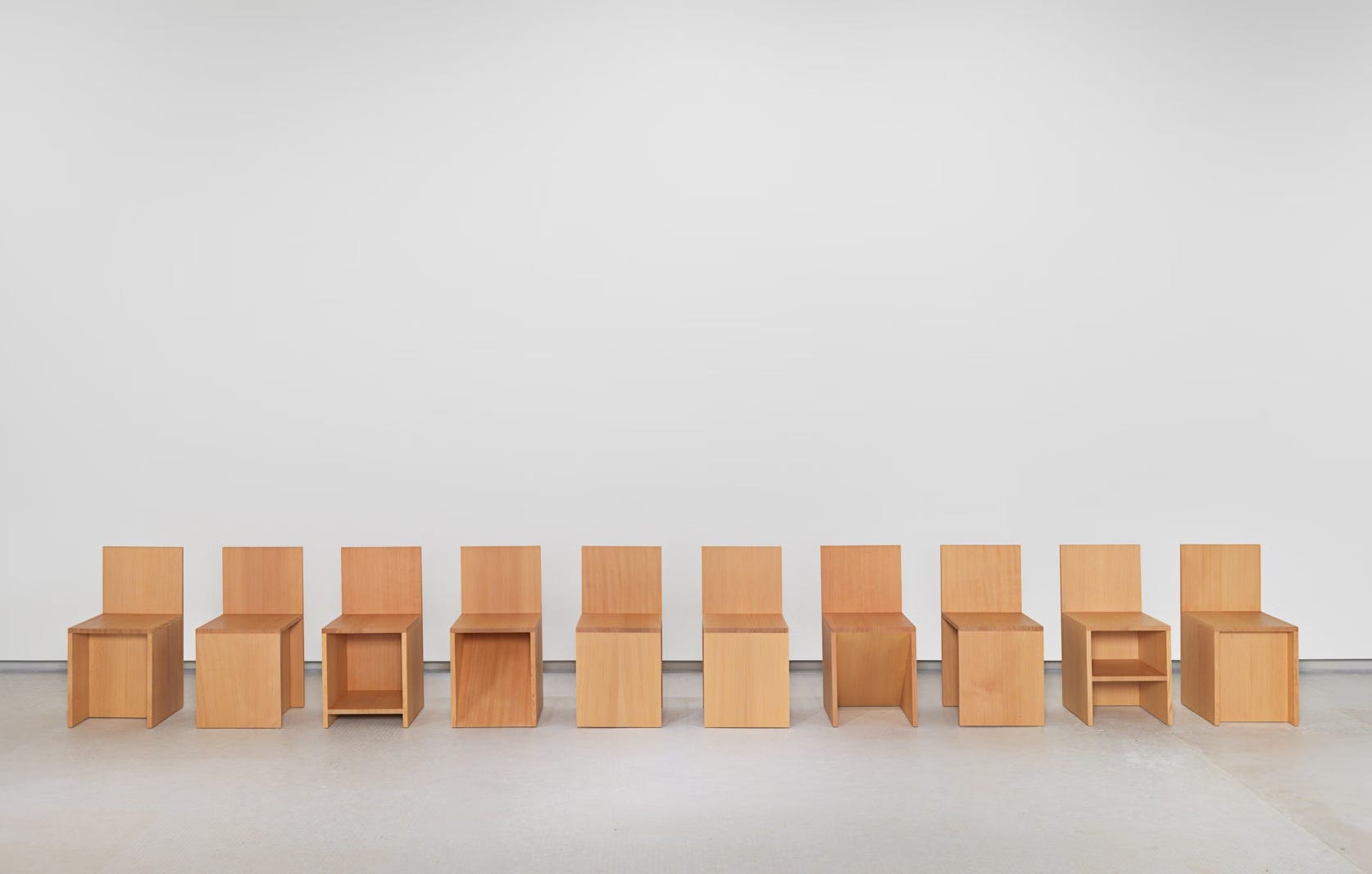
In reality, they emerged directly from the same intellectual concerns as his art.
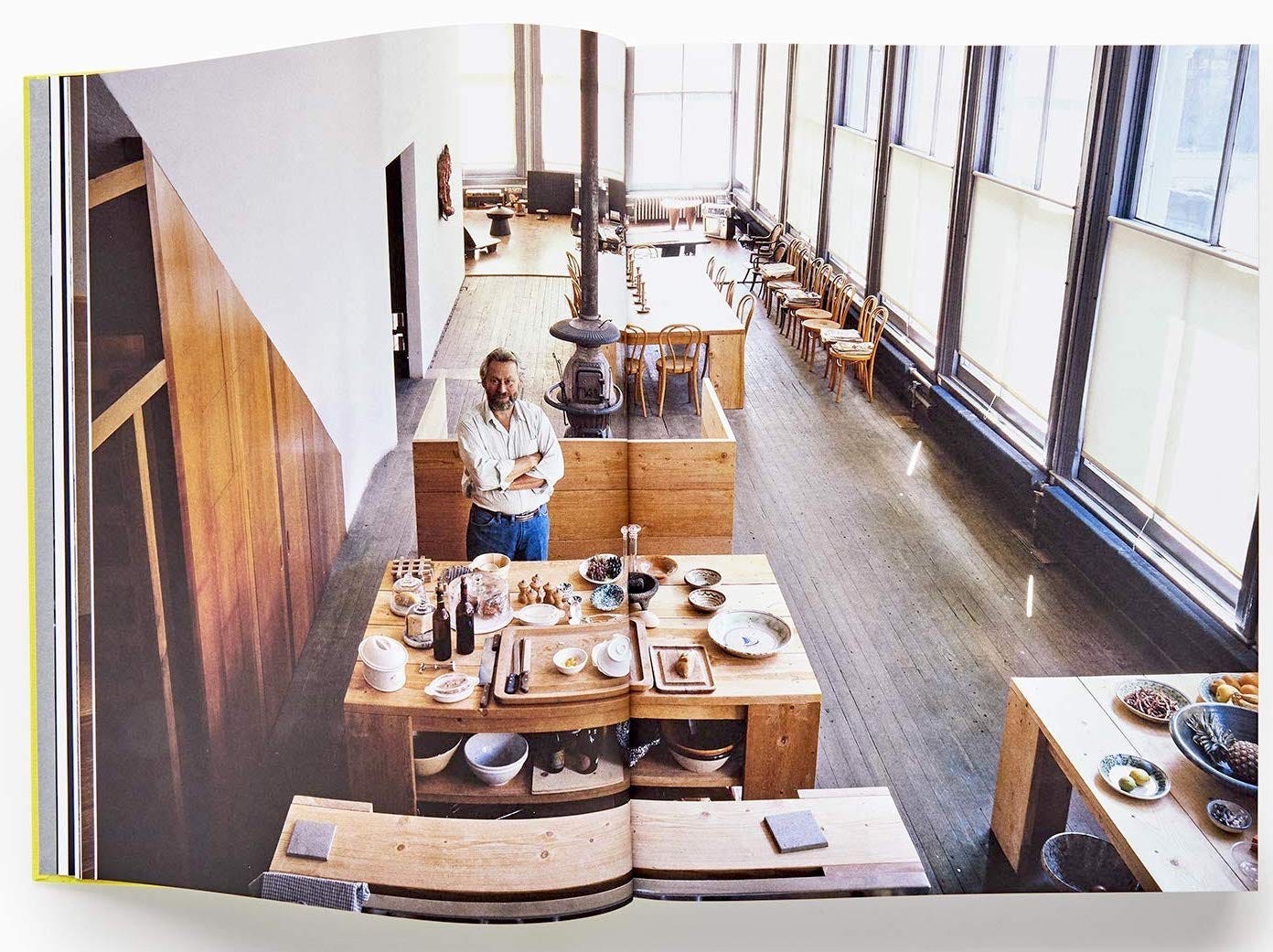
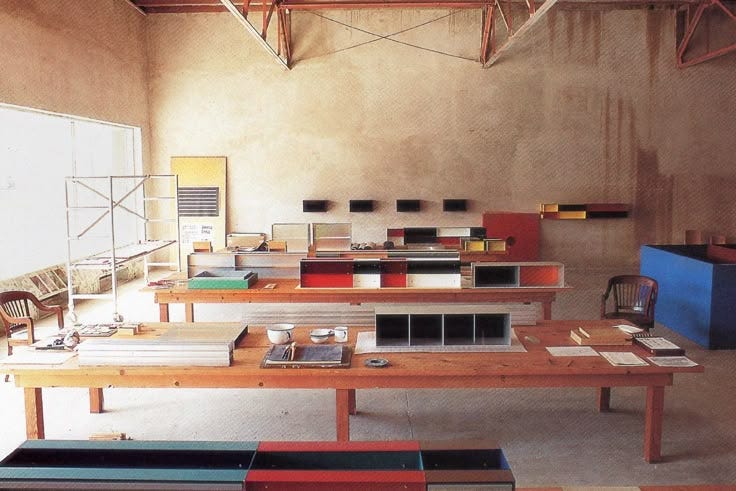
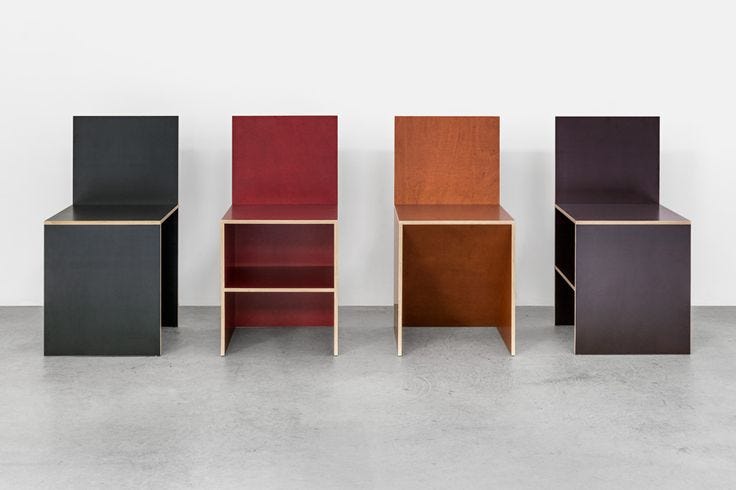
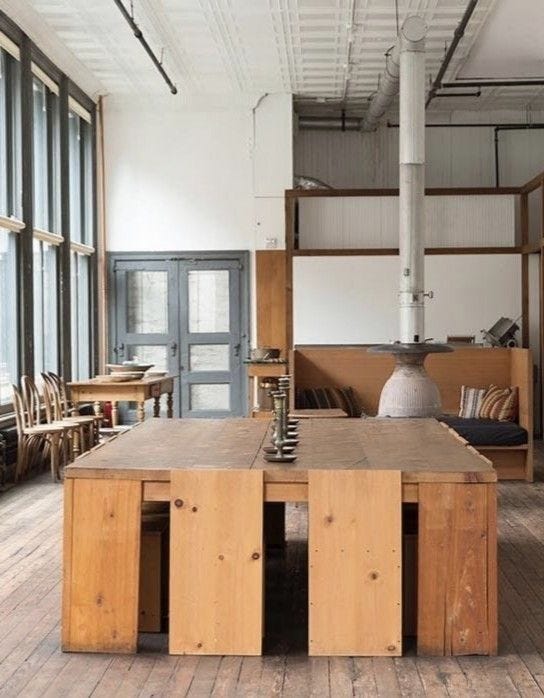
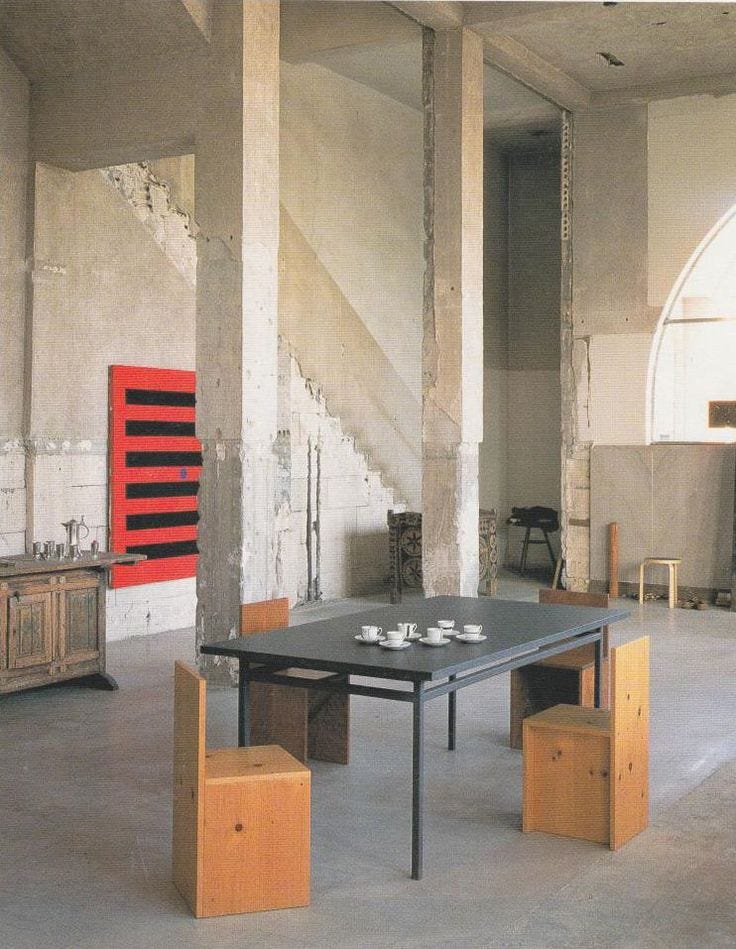
Judd designed chairs, tables, desks, shelves, cups, buildings, interiors, and urban-scale architectural proposals. He regarded distinctions among art, architecture, and design as less important than the quality of spatial thinking.
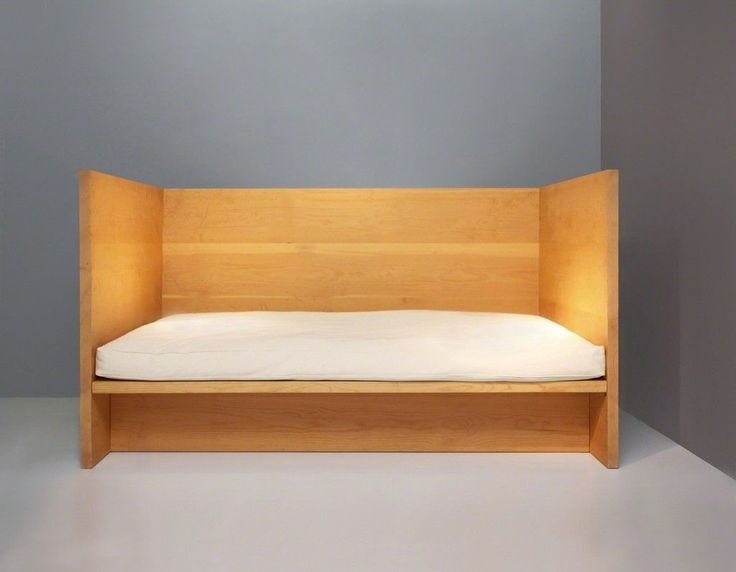
His furniture is often mistaken for sculpture because it shares the same formal vocabulary: rectilinear geometry, exposed structure, precise proportions, and material clarit.
Similarly, his architectural work extended his investigation of space into inhabitable environments. In Marfa he adapted existing buildings, designed additions, and developed proposals ranging from shelters to large civic projects. Although less famous than his sculpture, architecture occupied an increasingly important role during the final decades of his life.
Lesser-Known Aspects of Judd’s Career and Legacy
His Resistance to the Label “Minimalist”
Although now regarded as Minimalism’s central figure, Judd consistently resisted being categorized as a minimalist. He believed the term oversimplified a far more complex artistic transformation.
His Extensive Career as an Art Critic
His reputation as a theorist rests not only on Specific Objects but on an enormous body of criticism written during the early 1960s. These texts remain essential for understanding postwar American art.
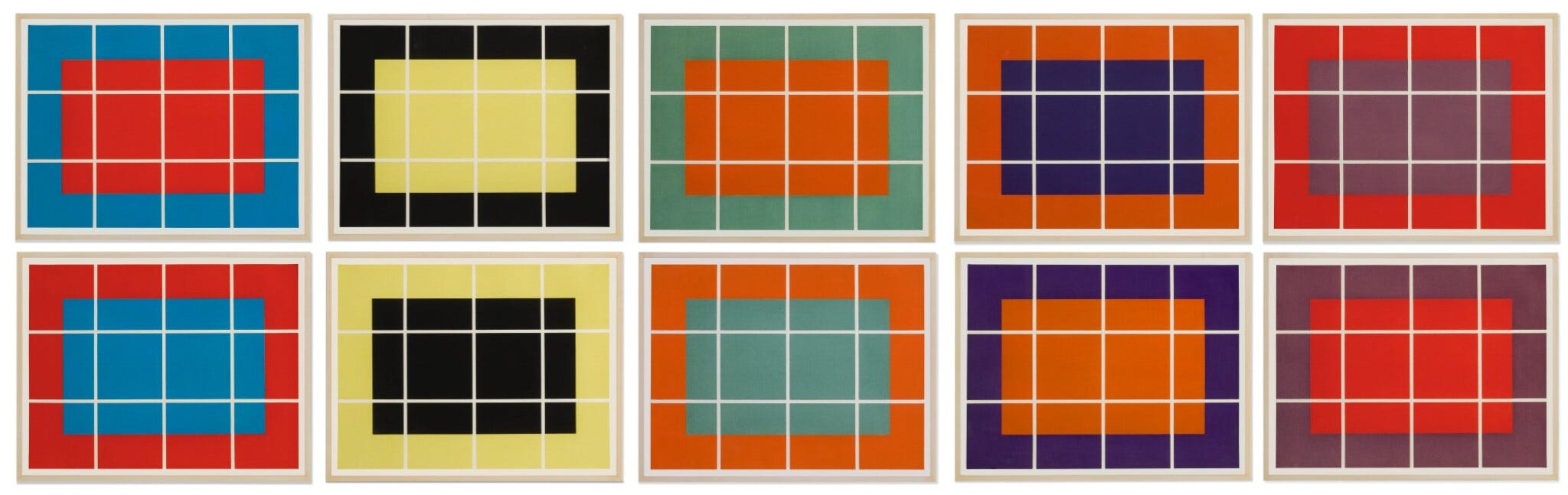
Early Engagement with Printmaking
Before becoming known for industrial materials, Judd worked extensively in printmaking and woodcut techniques. These experiments reveal a gradual movement from representation toward abstraction.
Commitment to Environmental Preservation
Judd wrote not only about art but also about land conservation, civic responsibility, and ecological stewardship. His acquisition of vast tracts of land in West Texas reflected both aesthetic and environmental concerns.
Installation as an Integral Component of the Artwork
Many artists treat installation as secondary. Judd considered placement inseparable from the work itself. This conviction ultimately led to the creation of the permanently installed spaces preserved today by the Judd Foundation.
Influence Beyond the Visual Arts
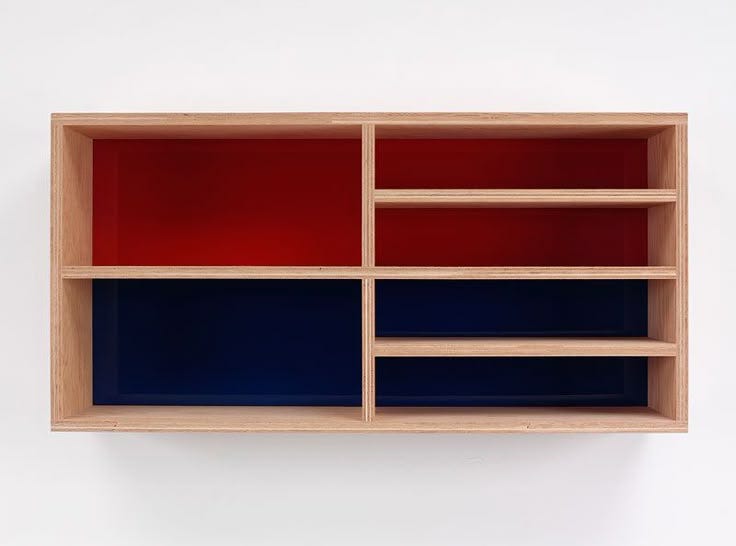
Contemporary architectural minimalism owes a substantial debt to Judd’s thinking about proportion, material honesty, and spatial clarity, even among architects who may never explicitly cite him.
Donald Judd’s Enduring Significance
Donald Judd’s importance extends far beyond Minimalism.
His achievement was the construction of an entirely new framework for understanding art. He rejected illusion in favor of actuality, composition in favor of systems, symbolism in favor of presence, and temporary display in favor of permanent installation. Across sculpture, architecture, furniture, criticism, and institutional design, he pursued a remarkably consistent question: how can objects clarify our experience of space?
More than three decades after his death, Judd remains a defining figure because his work continues to challenge viewers to reconsider what art is and where it resides. The answer he proposed was radical in its simplicity. Art does not represent experience.
Art is experience.
Notes
David Raskin, Donald Judd (New Haven: Yale University Press, 2010), 1–15.
Donald Judd, “Specific Objects,” Arts Yearbook 8 (1965), reprinted in Complete Writings 1959–1975 (Halifax: Press of the Nova Scotia College of Art and Design, 1975), 181–189.
Raskin, Donald Judd, 17–23.
Donald Judd, Complete Writings 1959–1975.
James Meyer, Minimalism: Art and Polemics in the Sixties (New Haven: Yale University Press, 2001), 3–22.
Raskin, Donald Judd, 39–52.
Judd, “Specific Objects,” 184.
Ibid., 181–189.
Meyer, Minimalism, 101–126.
Raskin, Donald Judd, 95–102.
Judd, “Specific Objects,” 183–185.
Meyer, Minimalism, 114–119.
Judd, “Specific Objects,” 184.
Michael Fried, “Art and Objecthood,” Artforum 5, no. 10 (1967): 12–23.
Donald Judd, Donald Judd Spaces (Munich: DelMonico Books/Prestel, 2020).
Marianne Stockebrand, ed., Chinati: The Vision of Donald Judd (New Haven: Yale University Press, 2010).
Donald Judd, Donald Judd Furniture (New York: Judd Foundation and Mack Books, 2024).
Flavin Judd, ed., Donald Judd Furniture.
Judd, Complete Writings 1959–1975.
Meyer, Minimalism, 1–10.
Stockebrand, Chinati.
Raskin, Donald Judd, 140–168.
Further Reading
Primary Sources
Donald Judd, Complete Writings 1959–1975
Donald Judd, “Specific Objects” (1965)
Donald Judd, Donald Judd Spaces
Donald Judd, Donald Judd Furniture
Donald Judd, Architektur / Architecture
Essential Scholarship
David Raskin, Donald Judd
James Meyer, Minimalism: Art and Polemics in the Sixties
Anna Chave, Minimalism and the Rhetoric of Power
Alex Potts, The Sculptural Imagination
Marianne Stockebrand, Chinati: The Vision of Donald Judd
Related Critical Texts
Michael Fried, “Art and Objecthood”
Robert Morris, “Notes on Sculpture”
Mel Bochner, essays on Judd and postwar American art